
Clota and the Maeatae Warrior
Two of the recent murals in the Faces of the Ancients series are Clota and the Maeatae warrior.
Clota was painted in December 2025 on Alva main street, on the side of a fishmongers. The Maeatae warrior was painted in September 2025 on the Menstrie cycle path near Tullibody.
Both murals took roughly 2–3 days of actual painting time. Clota spanned over a week because of the weather — the alley was a wind tunnel, cold air came down off the Ochil hills, and it rained on and off. Work had to stop and start each day until it was finished. The Maeatae mural was large (about 8 m × 5.5 m), so it took three full days once the conditions allowed.
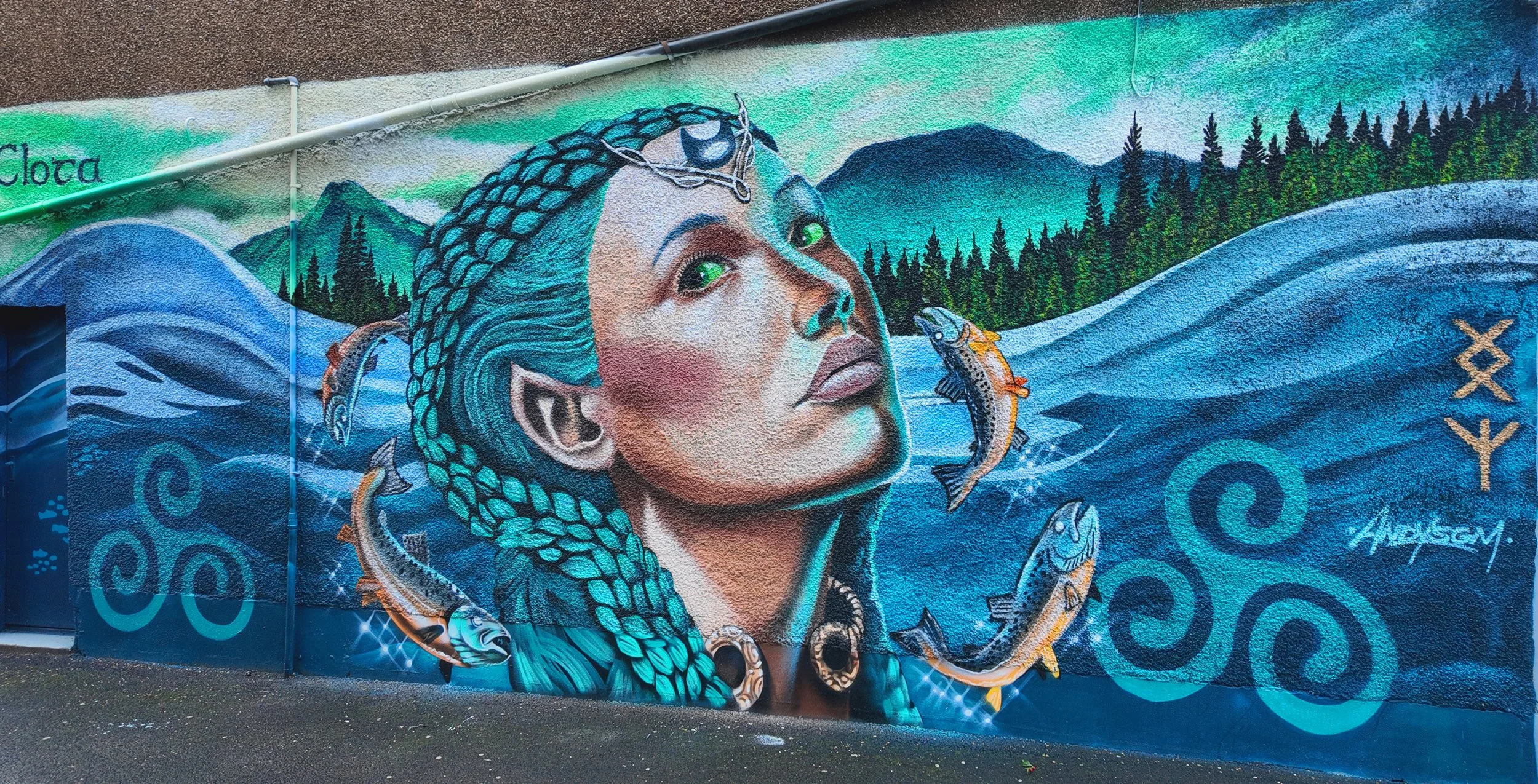
Clota was chosen because I had already painted three male figures and wanted to do a female character. The location was on a fishmongers, so a river goddess made sense. Clota (also spelled Clüd or Clota) is believed to be the Celtic river goddess who gave her name to the River Clyde. The Forth flows into the Clyde, so the name felt locally relevant. Around her I painted four salmon — a nod to the Salmon of Knowledge from Irish lore, though I used four instead of one.
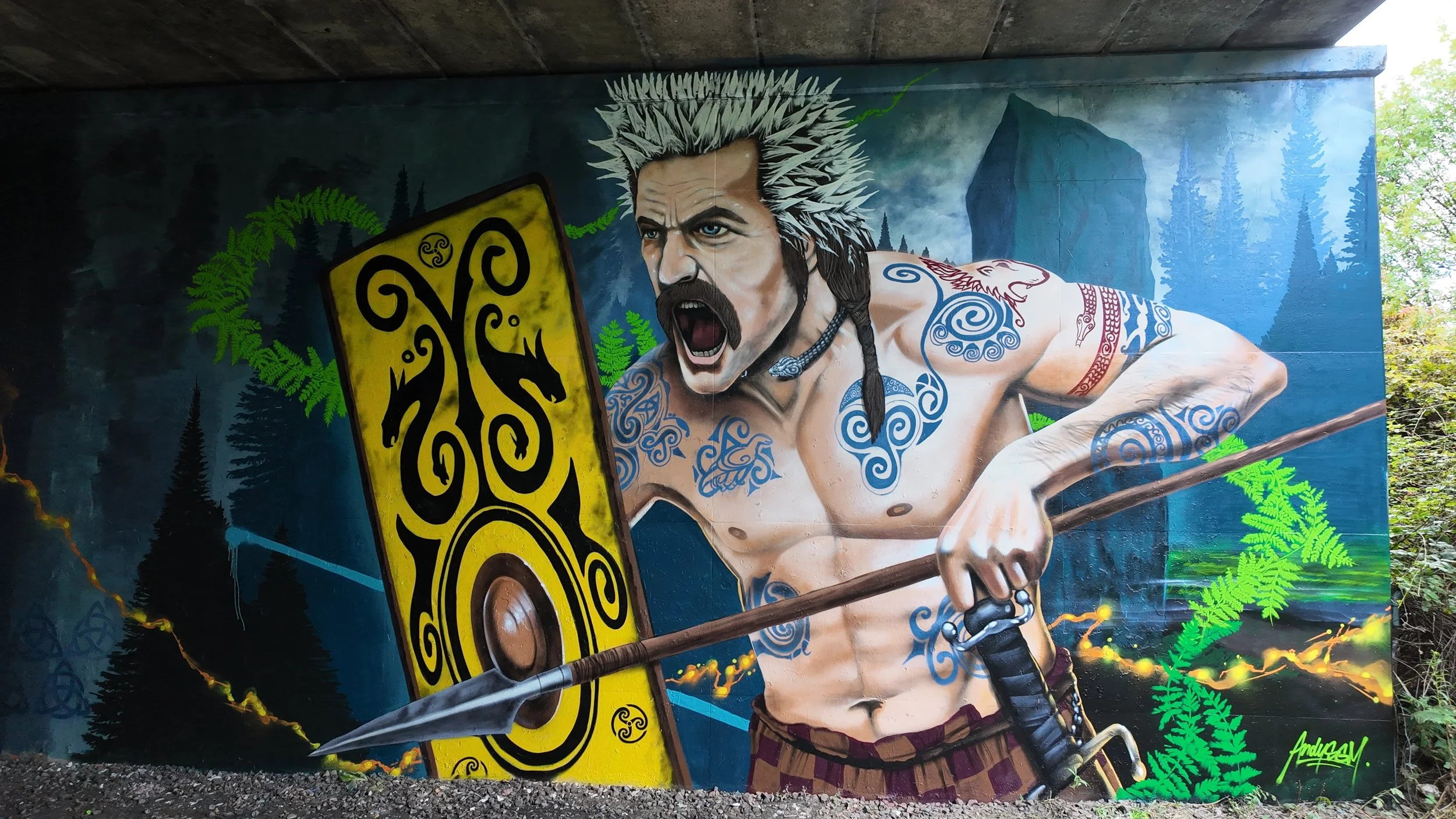
The Maeatae warrior was painted because the Maeatae were a local tribe. Their hill fort, Dumyat, overlooks the area and can be seen from the mural. The name Dumyat means "Fort of the Maeatae". The Maeatae were a Celtic people living in central Scotland during the Roman period. They resisted Roman expansion and are mentioned in Roman accounts as one of the tribes north of the Antonine Wall. The mural shows the warrior with lime-spiked hair and tattoos, both common among Celtic tribes of the time.
The response from locals was very positive for both pieces. Easily over 100 people stopped to talk while I was working. Clota also got coverage in the local press, which was unexpected but welcome.
These murals are part of a wider effort to bring ancient and early historic themes into public spaces.
